Pain Point
An exchanger's wallet-checking gap is a direct financial and regulatory exposure, not a theoretical risk.
A crypto wallet address check that only confirms an address is valid, without screening its history, lets an exchanger unknowingly process funds from a sanctioned or mixer-linked source.
Crypto wallet fraud patterns specific to exchangers include wallets used briefly to receive stolen or scammed funds before being abandoned — a signature a one-time balance check won't catch.
Hardware crypto wallet fraud — counterfeit devices or compromised seed phrases used to drain a victim's holdings — often surfaces first as an unusual exchange transaction, if anyone's actually watching for the pattern.
A crypto wallet scam victim sending funds through an exchanger has no way to know the destination wallet is compromised unless the exchanger's own screening catches it first.
For an exchanger, the wallet check isn't protecting the business from a hypothetical regulatory finding — it's the thing standing between a normal transaction and processing someone else's fraud.
How It Works — The 5 Levels of Checking a Wallet
Wallet checking at exchanger scale runs through five levels, and the last three are what actually protect the business:
- Level 1 — Basic lookup — confirming a wallet's balance and transaction history via bitcoin address lookup or blockchain search — the starting point, not the whole check.
- Level 2 — Manual pattern review — flagging obviously suspicious wallets by eye — works at low volume, breaks down the moment transaction volume grows.
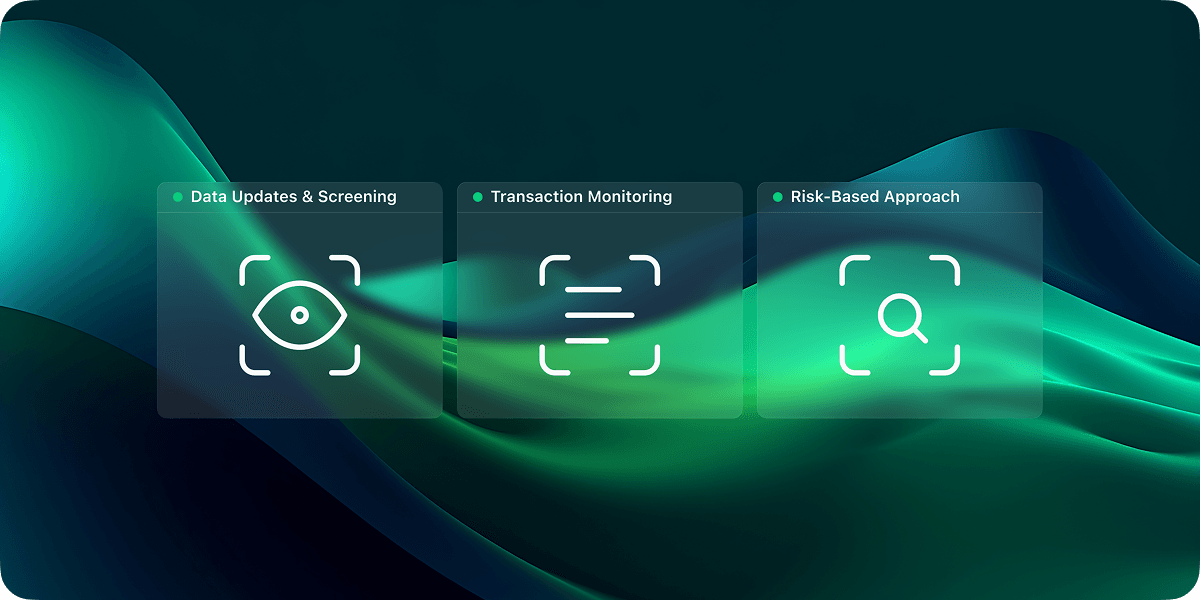
- Level 3 — AML wallet check / sanctions screening crypto — automated screening of every wallet an exchanger touches against sanctions lists, mixer databases, and known illicit-activity data, run on every transaction rather than a sample.
- Level 4 — Crypto wallet risk scoring — a continuous score reflecting a wallet's evolving exposure, so a counterparty that looked clean last week doesn't get a free pass this week.
- Level 5 — Wallet fraud prevention at transaction speed — screening integrated directly into the exchange flow, so a flagged wallet gets caught before the exchanger completes the trade, not after.
This is the difference between an exchanger that checks wallets occasionally and one that's built wallet checking into how every transaction actually happens.
False Positives
An exchanger that flags every unfamiliar wallet as high-risk grinds its own transaction volume to a halt — most wallets with an unusual pattern are still completely legitimate. Precision at levels 3 and 4 is what keeps wallet screening from becoming the reason customers switch to a competitor.
Business Impact
Reduced exposure to processing sanctioned, mixer-linked, or scam-connected funds.
Wallet checks running on every transaction, not a manual sample.
Faster identification of hardware-wallet-fraud and scam patterns before they compound.
A documented screening process ready for banking-partner or regulatory review.
How Finchecker Solves It
Finchecker's wallet screening and wallet fraud prevention run on every transaction an exchanger processes — sanctions screening, continuous risk scoring, and real-time integration into the exchange flow itself, built for exchanger transaction volume.
Make wallet checking part of every transaction, not an occasional spot-check. Talk to Finchecker about wallet screening for exchangers.