Pain Point
The economics of faking an identity have collapsed, which changes what id verification software has to defend against.
Sumsub has reported AI-generated identity documents offered for sale from around $15 each, generated in bulk from a spreadheet of names — a fraud ring can now produce dozens of synthetic applications for the price of a lunch.
MIT Technology Review's April 2026 investigation identified 22 public channels selling virtual camera injection tools from about $30, several explicitly advertising which platforms their tools could bypass.
A payment provider processing high volumes of individual and business onboarding is a higher-value target for this tooling than almost any other segment, simply because of throughput.
KYB onboarding solution gaps compound the same problem on the business side — a fabricated business entity, backed by a synthetic principal identity, exploits the same weaknesses a fake personal ID does.
At $15 to $30 per attempt, fraud tooling has moved from a specialist's project to a volume business — which means a payment provider's verification process is now competing against attackers who can afford to fail most of the time and still profit.
How It Works — The 7-Step Process
Identity verification for payment providers runs the same seven steps as banking, compressed for speed:
Data submission — the applicant's core details are captured as part of a fast, mobile-first onboarding flow.
Document capture and authentication — id verification software checks the document's security features and structure in seconds, tuned across the international formats a global customer base brings.
Data cross-check — extracted document data is matched against submitted information, confirming the identity independent of the document image alone.
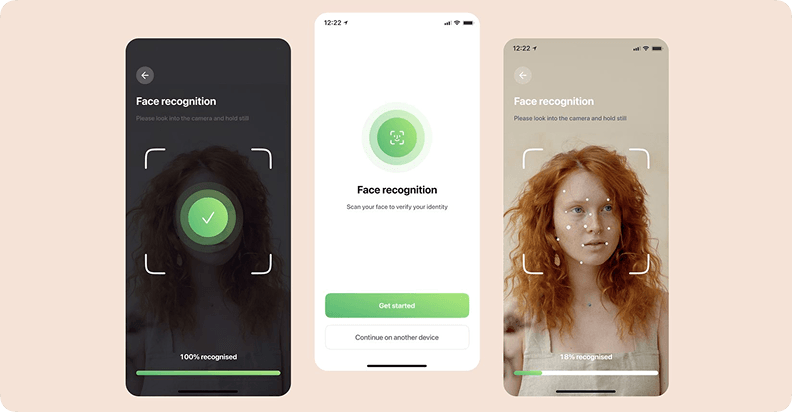
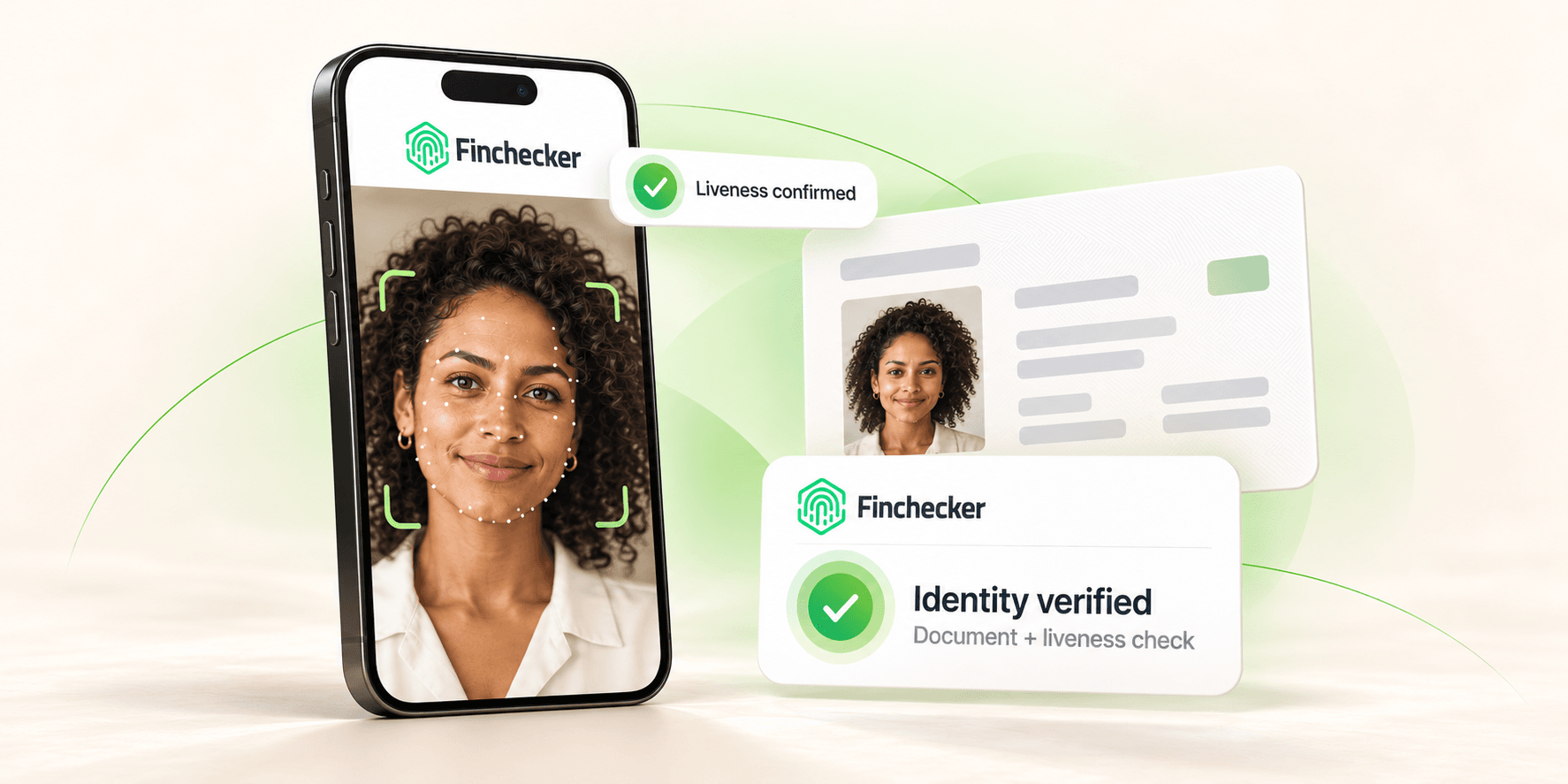
Biometric liveness and injection-attack detection — a live selfie confirms the applicant is present and matches the document, with injection-attack detection closing the gap a $30 camera-injection tool is built to exploit.
Risk signal enrichment — device and application-history signals flag when the same device or document fragment shows up across supposedly unrelated applications — a signature of the bulk, low-cost fraud tooling now in circulation.
Automated decisioning — fast, inline pass/review/decline routing, since speed onboarding software only works if the decision keeps pace with genuine applicants.
Ongoing re-verification — KYB onboarding solution logic and individual verification both continue after account opening, catching identities that looked clean at signup.
This is what customer onboarding software actually needs to do in 2026: clear a genuine applicant in seconds, while catching the specific low-cost synthetic identity and injection-attack patterns that make bulk fraud economically viable.
False Positives
A process that rejects legitimate applicants over document format or lighting costs a payment provider exactly the customers it's trying to grow — a rejected applicant usually just signs up with a competitor. Precision at steps 4 and 5 is what catches cheap, scaled fraud attempts without penalizing the far larger population of genuine ones.
Business Impact
Reduced exposure to the $15-document, $30-injection-tool fraud economy now driving bulk onboarding attacks.
Fake id detection tuned to catch synthetic identities specifically, not just obviously forged documents.
Higher legitimate onboarding completion, since precision protects conversion as much as fraud prevention.
KYB onboarding solution coverage extending the same defense to business and merchant applicants.
How Finchecker Solves It
Finchecker's id verification software combines document authentication, liveness detection with injection-attack detection, and cross-applicant fraud signals into one fast, connected process — built for the volume-fraud economics of 2026, not the manual forgery attempts it replaced.
Catch $15 fake documents and $30 injection tools before they clear onboarding. Talk to Finchecker about identity verification for payment providers.