Pain Point
For an iGaming operator, a weak pillar shows up directly in a licensing review.
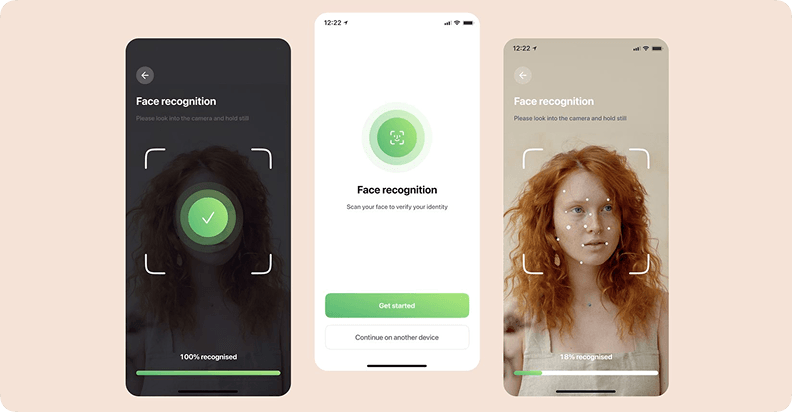
Pillar 5 failures are the most public ones in 2026: major platforms' face-based age checks were defeated within days by drawn-on disguises and synthetic 3D models — a demonstration of how fragile due diligence is without genuine liveness detection behind it.
Pillar 1 gaps let bonus abuse and multi-accounting patterns pass, since these risks only show up when transactions are monitored continuously, not just checked at registration.
Without pillar 4's independent testing, an operator can describe having monitoring during a license renewal, but not walk through how a specific abuse pattern was actually caught.
Pillar 3 gaps mean support staff miss the early signals — a player exhibiting classic bonus-farming behavior — that should route to compliance long before a formal alert fires.
For iGaming, the five pillars aren't abstract regulatory theory — they're the specific things a license renewal review examines, one at a time.
How It Works — The 5 Pillars
The five pillars mapped to what an iGaming operator actually needs:
Pillar 1 — Internal controls — transaction monitoring on deposit and withdrawal behavior, plus card anti-fraud scoring at deposit, running continuously rather than only at registration.
Pillar 2 — A designated compliance officer — empowered to act on player-level risk without derailing the platform's retention of legitimate high-value players.
Pillar 3 — Ongoing employee training — support and risk teams trained on iGaming-specific patterns — bonus abuse, multi-accounting, mule-linked deposit cycles.
Pillar 4 — Independent testing — documented proof the detection logic behind transaction monitoring and identity verification actually catches what it's supposed to, ready for the next license review.
Pillar 5 — Customer due diligence — identity verification with genuine liveness detection at registration, closing the exact gap face-only age checks publicly failed at in 2026, plus ongoing monitoring for as long as the account is active.
Registration proves who a player is once. The other four pillars prove the operator kept watching after that — which is what a license renewal actually reviews.
False Positives
Overcorrecting on pillar 5 costs an operator exactly the players the business depends on — a real player rejected at registration rarely retries, they register somewhere else. Precision across all five pillars is what catches real abuse without treating every legitimate player like a suspect.
Business Impact
A documented program matching the standardized, risk-based supervision model EU regulators are moving toward.
Reduced license risk from the specific pillar gaps regulators have flagged across the industry in 2026.
Fewer legitimate high-value players lost to blanket-tightened controls.
A program the compliance officer can walk a licensing reviewer through, pillar by pillar.
How Finchecker Solves It
Finchecker connects identity verification with liveness detection, transaction monitoring, and card anti-fraud into one program built around all five pillars — giving an iGaming operator's compliance officer continuous, documented coverage instead of a registration-time snapshot.
Build a program that holds up to a license review, pillar by pillar. Talk to Finchecker about AML compliance for iGaming.