Pain Point
Not understanding this process is what makes a normal underwriting step feel like an obstacle.
A merchant unaware that business verification reaches past the company name to its actual owners doesn't understand why a payment partner is asking for a personal ID from a director, not just a business registration document.
Merchant identity fraud increasingly uses the same synthetic-identity techniques attacking individual onboarding — a fabricated business entity backed by AI-generated ownership documents, which is exactly why the owner-level check exists.
A merchant that doesn't understand the process can't anticipate what will speed it up — consistent business documentation, a clear ownership structure, verifiable contact and registration details.
Delays at this stage are usually the verification process working as intended on an unusual but legitimate structure, not an arbitrary holdup.
A merchant who understands what business verification is actually checking can prepare for it, instead of experiencing it as an unexplained delay.
How It Works — The 7-Step Process
From a merchant's side, business verification with an acquirer or PSP runs through seven steps:
Data submission — the merchant provides business registration details, ownership structure, and expected transaction profile.
Document capture and authentication — business registration documents and the individual IDs of key principals are checked for authenticity.
Data cross-check — submitted business details are matched against public registries and other trusted sources to confirm the entity actually exists as described.
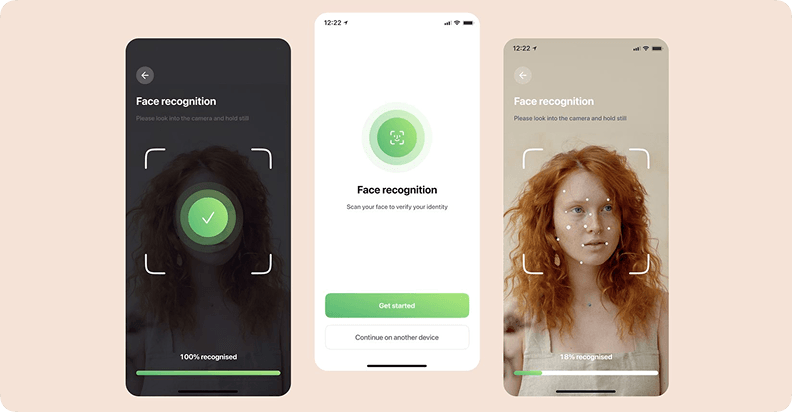
Biometric liveness and injection-attack detection — id verification software confirms the principals submitting ownership documentation are real, live individuals — not a stand-in used to pass verification on someone else's behalf.
Risk signal enrichment — the business's declared model, transaction profile, and industry category are checked against known risk patterns for that category.
Automated decisioning — applications clear automatically where the data lines up cleanly; anything unusual routes to manual underwriting review.
Ongoing re-verification — verification doesn't end at approval — KYB onboarding solution processes continue monitoring the business relationship, which is why an established merchant may still be asked to re-confirm details periodically.
This is the process behind every merchant account a payment partner approves — verifying not just that a business exists, but that real, identifiable people stand behind it.
False Positives
A payment partner applying maximum scrutiny to every applicant, regardless of actual risk, slows down onboarding for the low-risk majority unnecessarily. The businesses that move through fastest are the ones whose documentation is clean and consistent from step 1 — there's no way to skip verification, but there's a real way to make it fast.
Business Impact
Faster onboarding when business and ownership documentation is consistent and complete from the start.
A clearer understanding of what triggers additional review, and how to avoid it.
Confidence that the same rigor applied to your business is applied to every other merchant on the platform.
Fewer surprises during periodic re-verification, since ongoing monitoring is a normal part of the relationship, not a red flag.
How Finchecker Solves It
Finchecker powers business verification for many acquirers and PSPs — document authentication, principal identity verification, and ongoing KYB monitoring in one connected process, built to clear legitimate merchants quickly while catching synthetic and fraudulent business applications.
If you're a payment provider wanting faster, more defensible merchant verification, talk to Finchecker about identity and business verification built for underwriting speed.