

Pain Point
The Binance hack is the largest theft in crypto history, and almost every step of it happened in plain sight on public blockchains.
TRM Labs, Chainalysis and Elliptic put the loss at $6.36B to $6.43B, roughly four times the $1.5B Bybit hack of February 2025. The FBI attributed the attack to TraderTraitor, a North Korean hacking unit, on 31 October 2026.
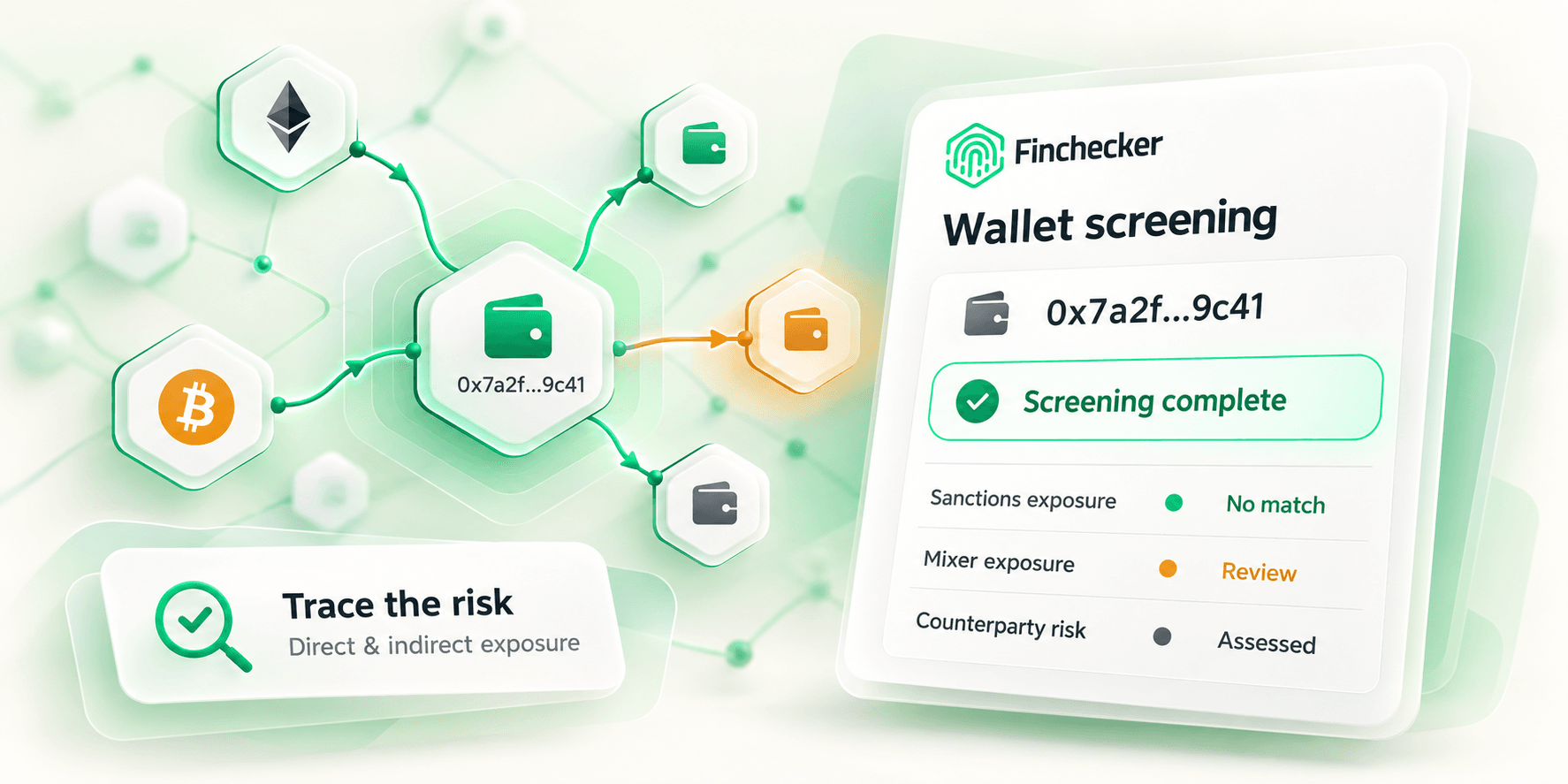
Before the theft, the operator wallet was funded with small withdrawals from Tornado Cash, a crypto mixer, according to TRM. Mixer funding is a risk signal a wallet check can see before an address ever appears on a sanctions list.
The stolen funds were split across ten blockchains and pushed through peel chains — long series of wallets, each passing most of the balance to the next — to make them harder to follow. Chainalysis reported laundering patterns that look automated, and saw Binance funds mixing on-chain with money from an earlier Bitget theft also attributed to North Korea.
Stablecoins made up about $3.46B of the stolen assets, per Elliptic. Roughly $3B was frozen on the first day, showing that fast screening and issuer action can claw back value, but only for platforms that react in minutes.
The FBI then asked every virtual asset service provider to block transactions from the laundering addresses it published. Any exchange, PSP or merchant receiving crypto payments in the following weeks is a potential exit point for that money.
It isn’t only billion-dollar hacks. Address poisoning — a scammer planting a look-alike address in a victim’s history so it gets copied by mistake — cost two users $12.25M and $50M (Scam Sniffer, December 2025 and January 2026). Whether the risk is a sanctioned hacker or a fake address one character away from the real one, the defence starts the same way: check the wallet address before the money moves.